
How Beatrix Potter Wanted Her Books to Be Read


Beatrix Potter’s works have earned a cherished spot in family home libraries for generations, and for good reason. Her charming watercolor illustrations, memorable stories, and the obvious love she poured into every page continue to captivate children and parents alike.
All of Beatrix’s tales center on animals (mostly in the beautiful British countryside) getting into delightful little adventures and mischief. It was an easy decision to include her books in the family read-aloud section of my American Pioneer Level 1 English curriculum.
Free Digital Versions (Public Domain)
Because her works are now in the public domain, you can easily access them all for free:
Ebooks:
#2 The Tale of Squirrel Nutkin
#6 The Tale of Mrs. Tiggy-Winkle
#7 The Tale of Mr. Jeremy Fisher
#9 The Tale of Jemima Puddle-Duck
#10 The Tale of Flopsy Bunnies
#11 The Tale of Mrs. Tittlemouse
#13 The Tale of Johnny Town-Mouse
#16 The Tale of Samuel Whiskers
#17 The Tale of The Pie and the Patty-Pan
#18 The Tale of Ginger and Pickles
#20 The Story of a Fierce Bad Rabbit
Audiobooks:
#2 The Tale of Squirrel Nutkin
#6 The Tale of Mrs. Tiggy-Winkle
#7 The Tale of Mr. Jeremy Fisher
#9 The Tale of Jemima Puddle-Duck
#10 The Tale of Flopsy Bunnies
#11 The Tale of Mrs. Tittlemouse
#13 The Tale of Johnny Town-Mouse
#16 The Tale of Samuel Whiskers
#17 The Tale of The Pie and the Patty-Pan
#18 The Tale of Ginger and Pickles
The Best Way: Print Editions Made for Little Hands
This post contains affiliate links. As an Amazon Associate, I earn from qualifying purchases made through these links, at no extra cost to you. Thank you for supporting my library-building recommendations!
That said, my absolute favorite way to experience these stories is in child sized print, exactly as Beatrix Potter intended.

She was firm about the format from the very beginning. When she first tried to publish The Tale of Peter Rabbit around 1900–1901, several commercial publishers rejected it (or her terms) partly because she insisted on the small, child-sized dimensions rather than a larger format that would let them charge more. She ultimately self-published a private edition in 1901. Frederick Warne & Co. later agreed to the trade edition in 1902, preserving her vision of compact, easy-to-hold books filled with her beautiful illustrations.
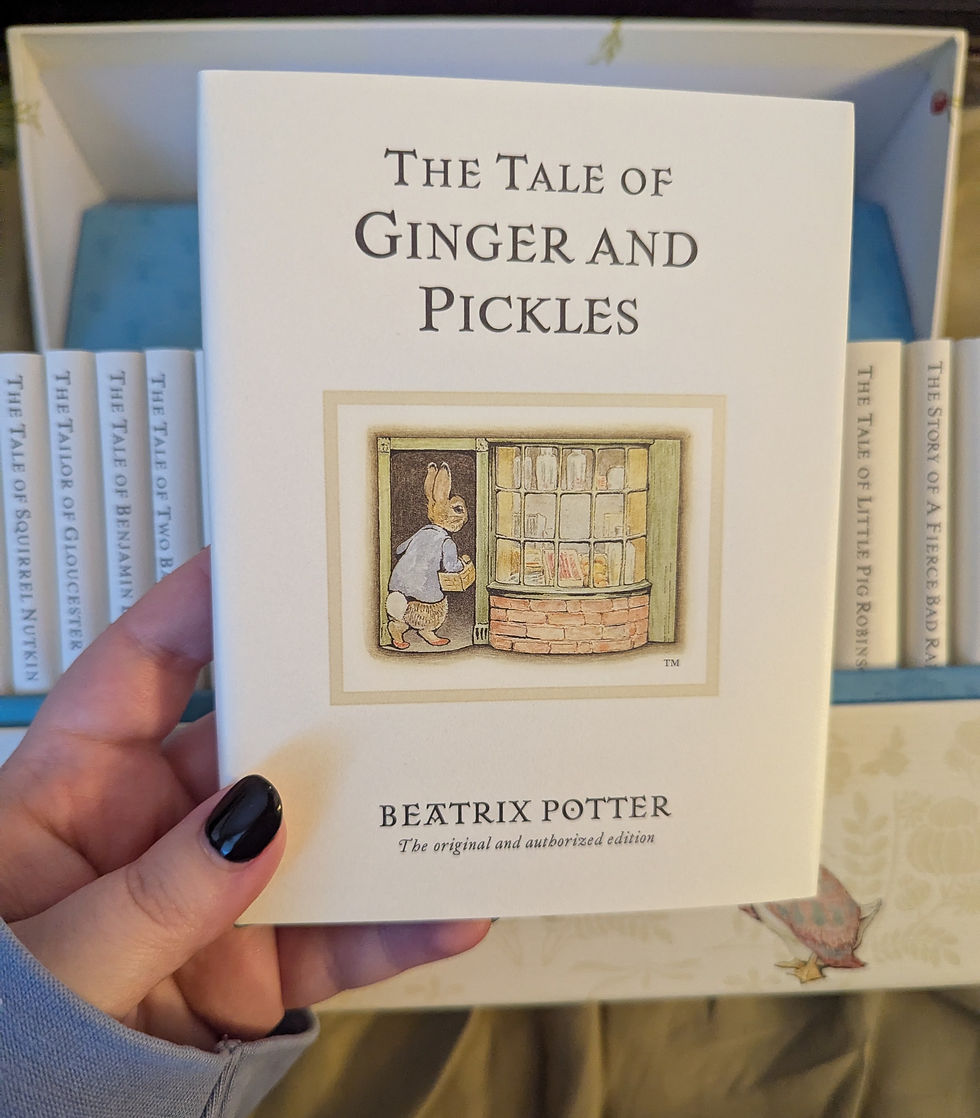
This “child-centred size” was intentional and innovative for its time. It made the books accessible and appealing to young readers, with sturdy pages perfect for small hands to turn. Potter prioritized practicality and delight for children over commercial considerations, and the original small hardback format became the beloved standard for the entire series.

This particular box set has been my absolute favorite collection of her stories that I’ve ever found (and I own multiple editions in both box set and treasury formats in our home library). It’s the classic editions, each little book true to the size and charm Beatrix envisioned.
If you’re looking for a high-quality, keepsake-worthy set to add to your own home library, I highly recommend it!
Happy reading,
Hannah


Hi, Hannah! I started reading Beatrix Potter to my children (8, 4 and 1) after you recommended her books in a post on X where I follow you. I was vaguely familiar with the name of the author, but I was happy to find her books at our local public library. Now Miss Moppet has become my 4 yo daughter's favorite character and I myself really enjoy reading the stories or listening to my oldest read them. My husband and I homeschool and we love books! We appreciate what you do!